Skip to content

Total Service

Happy Uri — livestock wastewater total service

“Happy” means content and well, “uri” is the pen where animals live. From odor control to wastewater treatment, reuse, discharge or zero-discharge and solids drying, we solve a farm’s manure problems in one service.

HAPPY URI

A farm where everyone—people and animals—is better off

Happy Uri is a smart system that manages the many tasks on a farm in one place. It handles the unpleasant jobs staff avoid, easing workloads and greatly improving working conditions.

Besides cutting operating costs, it keeps animals in a clean, safe, low-stress environment, improving animal welfare.

It lowers monthly rearing costs and mortality to raise profitability, and handles neighbors’ complaints systematically to build trust with the community.

SYSTEM

Circular operating system

  1. STEP 1 Farm & manure
  2. STEP 2 Solid–liquid separation
  3. STEP 3 Wastewater treatment
  4. STEP 4 Odor control
  5. STEP 5 Water polishing
  6. STEP 6 Treated water

Treated water

  • Reuse for barn cleaning
  • Drinking water for livestock (RO filter)
  • Discharge once standards are met
  • Zero-discharge evaporation where required

Solids

SolidsDrying & volume reductionFree collectionComposting

Service options

Option 1

Odor control + wastewater treatment

Option 2

Odor control + treatment + reuse (cleaning) + discharge

Option 3

Odor control + treatment + reuse (cleaning, drinking water) + zero-discharge + drying

BUILD FIRST

Build first, pay later — with 2× efficiency guaranteed

When the farm pays up front

  1. 1Down payment at order
  2. 2Interim payment during construction
  3. 3Balance on completion
  4. 4No technical warranty

HAYEON GLOBAL builds first

  1. 1Contract and we build first
  2. 2Completion — 2× efficiency guaranteed (vs. others, same footprint)
  3. 3Payment one month after start-up
  4. 410-year warranty and contracted operation

FUNCTIONS

What it does

Odor control

Our unique technology sharply reduces strong odors from barns and manure facilities.

Wastewater treatment

High-strength wastewater is treated quickly to meet discharge standards.

Zero-discharge evaporation (patent pending)

In zero-discharge areas, treated water is reused and the remainder safely evaporated.

Reuse

Treated water is reused for cleaning or as drinking water for livestock, lowering mortality.

Discharge

Treated water not reused is discharged in line with environmental standards.

By-product handling

Separated solids are dried and reduced hygienically, without odor.

Carcass handling

Carcasses are processed safely and efficiently with dedicated equipment.

Composting

Organic residues are collected free of charge and turned into eco-friendly compost.

STRENGTHS

Operating strengths

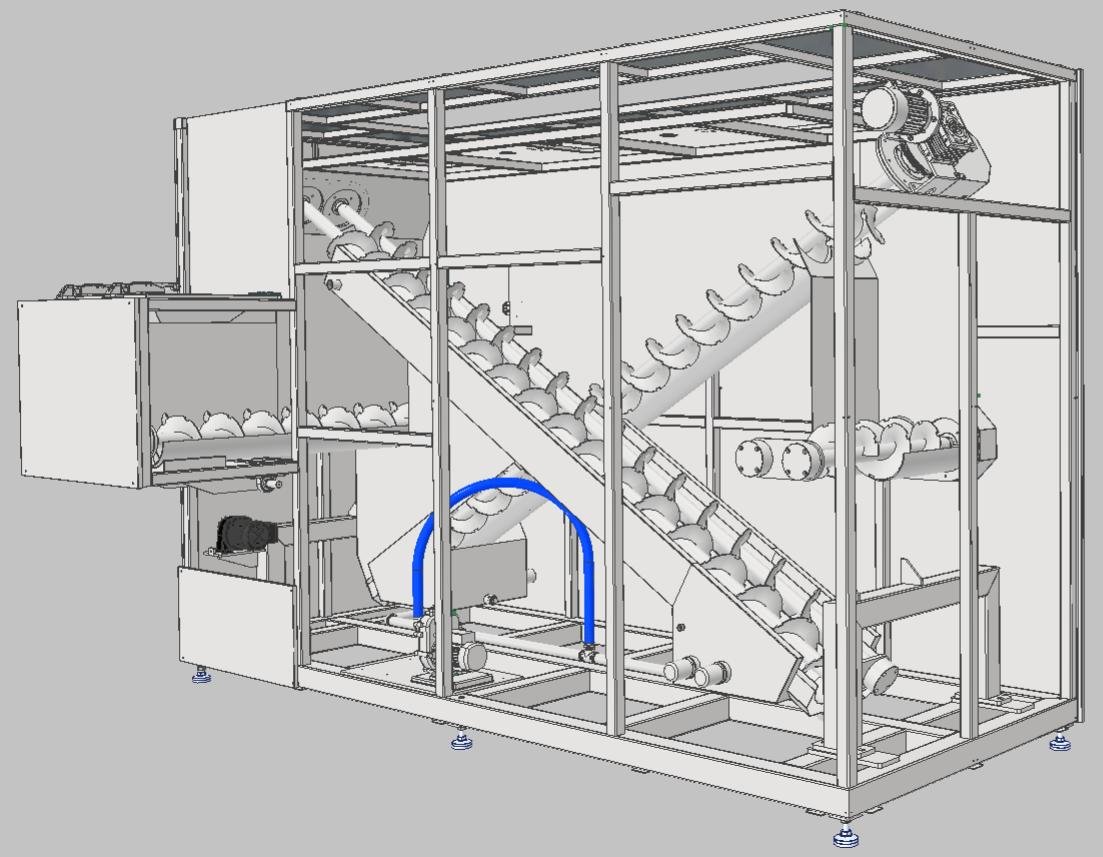
  • Even on a small site, capacity is about twice that of conventional plants.
  • Circular treatment removes odor and enables reuse, stable discharge and zero-discharge.
  • Reliably treats high-strength effluents, including food waste leachate.
  • Retrofits easily into shallow existing plants to relieve reactor capacity shortages.
  • No mechanical parts inside the reactor: fewer breakdowns and easy maintenance.
  • Nozzles are made of durable STS or PE for long service life.
  • Specialized know-how in microbial activation makes plant odors fade or disappear.

COMPARE

How it compares

Current methods — problemsHappy Uri — advantages
Outsourcing is expensive (KRW 30,000/t — KRW 18 million a month at 20 t/day) Rental operating cost is lower than monthly outsourcing, with no price swings
Hard to remove the root cause of odor Our unique technology sharply cuts strong odors
Hard to bring high-strength wastewater within limits Even high-strength wastewater can be reused, discharged or evaporated
Stockpiled manure breeds odor and germs Immediate drying prevents odor and germs
Removal only in winter, needing heavy machinery (KRW 600,000/day for 25 t) Dried by-products are collected free of charge

RESULTS

Results confirmed by official test reports

Accredited laboratory reports and on-site water analysis confirm the odor and water quality improvements.

Water quality improvement

ParameterRaw wastewaterEffluent beforeEffluent after
BOD8,380.0—8.7
COD3,595.6——
SS835.0262.525.0
T-N1,363.1416.860.05
NO₃-N—250.9—

Unit: mg/L

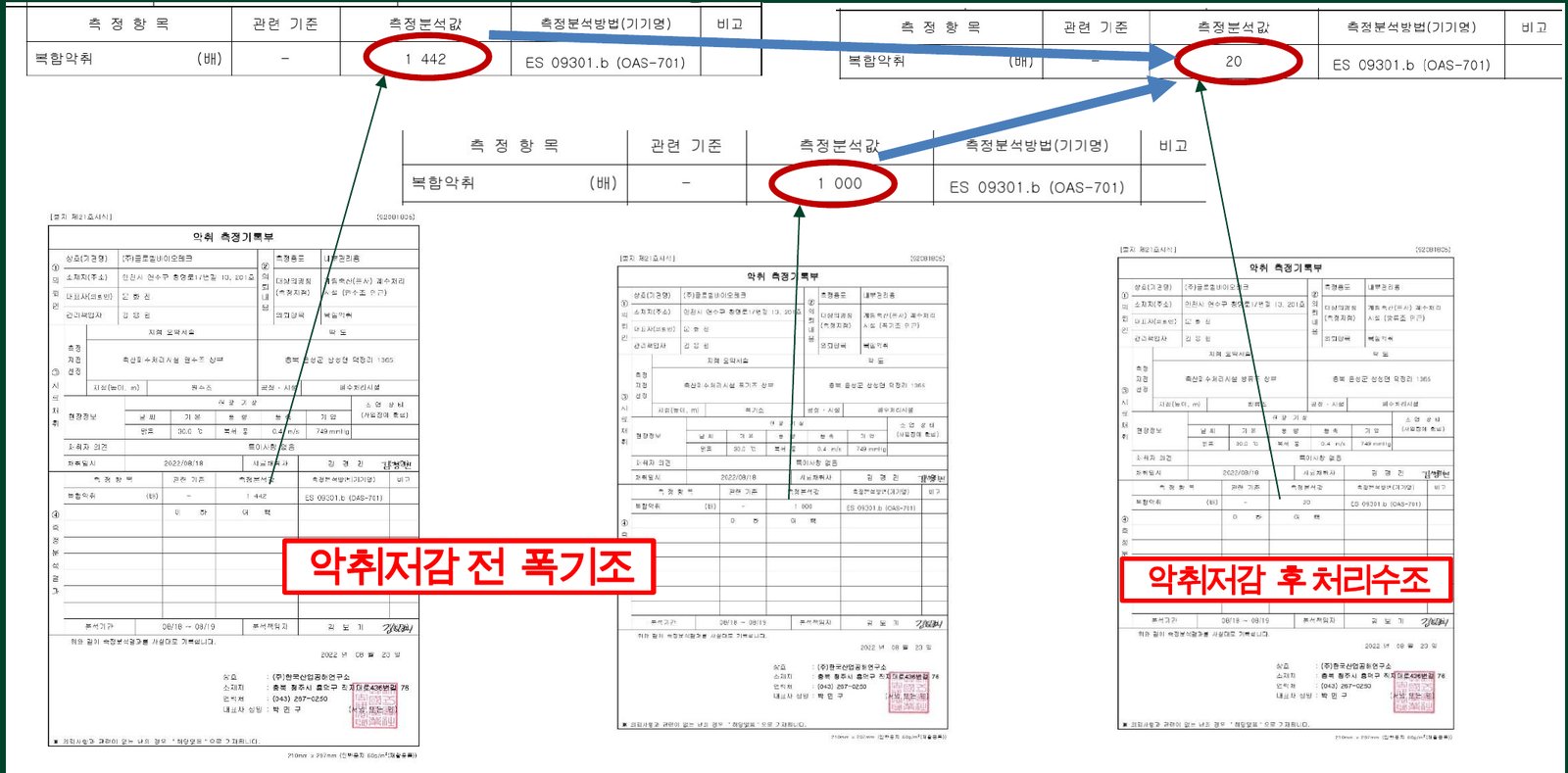
Composite odor test reports: aeration tank before treatment 1,442 → treated water tank after treatment 20 (dilution factor)

REUSE

Reuse system

Wastewater circulates internally from the slurry pit to the liquid manure plant, boosting microbial activity; the heat this generates cuts the volume by about 70%. The remaining 30% can be discharged or used as liquid manure.

  • About 70% less wastewater
  • Cost per ton: KRW 30,000 outsourced → KRW 5,000 or less on site
  • Mortality down from 5–7% to about 1–2%, adding revenue
  • Better water quality and 50% less sludge
  • Lower electricity bills for existing scrubbers

Treating to discharge standards requires additional works.

DRYER

Solids composting — drying and volume-reduction unit

  • Large capacity
  • Continuous feeding for efficient work
  • X-type agitation speeds processing
  • Odor reduction
  • Rental or lease — lower up-front cost and risk, easy upkeep, thorough machine care, safe handling through to the end product

VIDEO

On-site equipment video

  • Even on a small site, capacity is about twice that of conventional plants.
  • Circular treatment removes odor and enables reuse, stable discharge and zero-discharge.
  • Reliably treats high-strength effluents, including food waste leachate.
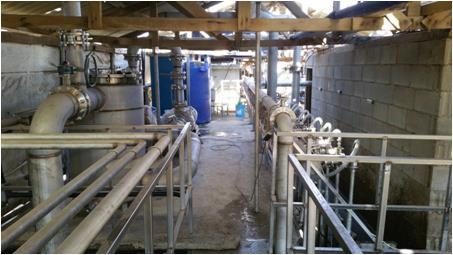
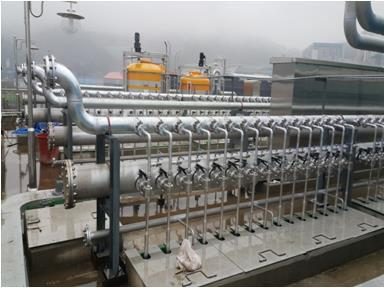
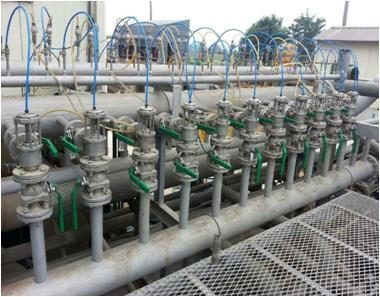
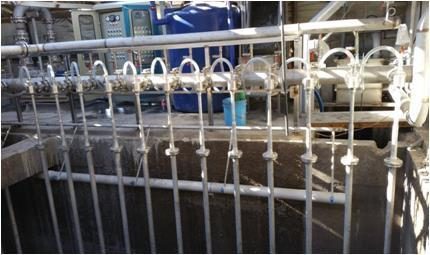
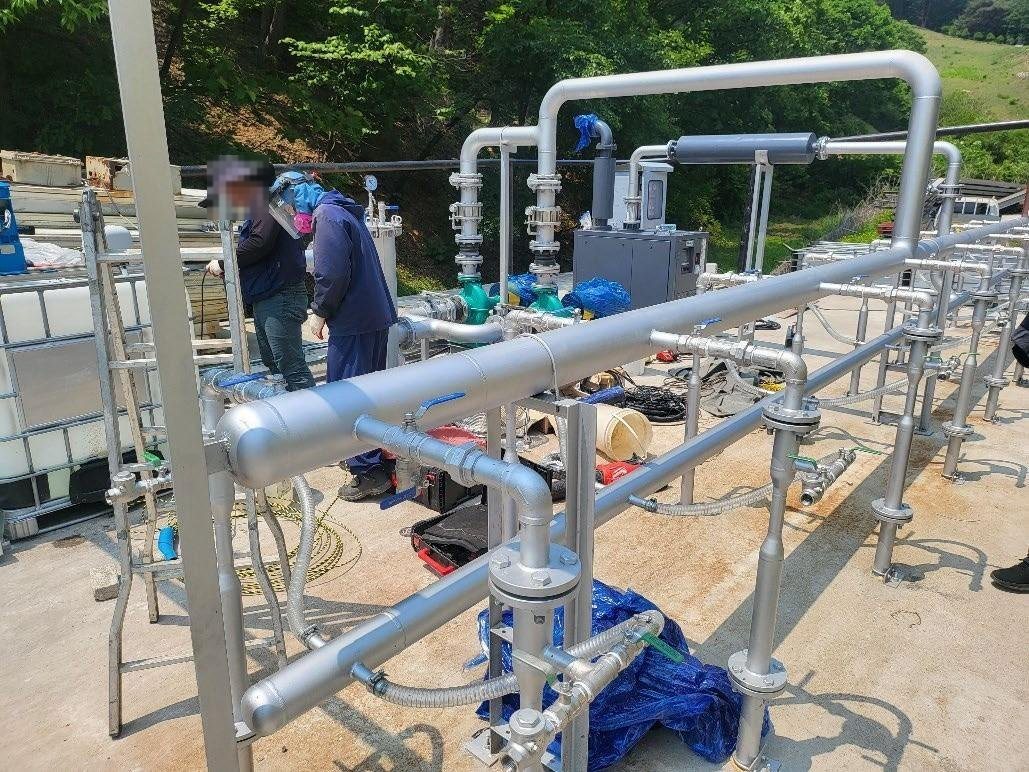
Site photos

REFERENCES

Sites

Livestock wastewater plant, Eumseong Wastewater

Livestock wastewater plant, Eumseong

In operation

Eumseong, North Chungcheong 150 m³/day

High-strength livestock wastewater is treated with GBT-M after separation to within discharge limits. Composite odor fell from 1,442 to 20.

Influent
BOD 8,000 ppm · T-N 1,500 ppm (after separation)
Effluent
BOD ≤ 50 ppm · T-N ≤ 60 ppm
Livestock wastewater plant for a farming cooperative Wastewater

Livestock wastewater plant for a farming cooperative

In operation

275 m³/day

Treats 275 t/day of high-strength livestock wastewater within discharge limits.

Influent
BOD 8,500 ppm · T-N 1,600 ppm (after separation)
Effluent
BOD ≤ 50 ppm · T-N ≤ 60 ppm
High-strength food waste leachate treatment Wastewater

High-strength food waste leachate treatment

In operation

Gyeonggi 150 m³/day

After solids separation, GBT-M treats concentrated leachate to discharge standards.

Influent
BOD 8,000 ppm · TN 3,000 ppm
Effluent
BOD ≤ 50 ppm · TN ≤ 150 ppm
Sewage sludge condensate plant for a public environmental agency Wastewater

Sewage sludge condensate plant for a public environmental agency

In operation

680 m³/day

A public facility treating nitrogen-rich condensate from sludge drying.

Influent
BOD 300 ppm · TN 1,307 ppm
Effluent
BOD ≤ 20 ppm · TN ≤ 20 ppm
Paper mill industrial wastewater plant Wastewater

Paper mill industrial wastewater plant

In operation

6,000 m³/day

GBT-M reactors applied to large-volume paper mill effluent.

Influent
BOD 1,500 ppm · COD 900 ppm
Effluent
BOD 5 ppm · COD 30–50 ppm
Sewage sludge condensate odor control and discharge plant, Jeju Wastewater

Sewage sludge condensate odor control and discharge plant, Jeju

In operation

Jeju City, Jeju 200 t/day

A 200 t/day plant that reduces odor from sewage sludge condensate and discharges treated water within effluent standards.

Will it work at your site?

Just tell us the wastewater type and daily volume. We will assess your site and propose rental terms free of charge.

Call us Free consultation